May 1, 2026
What will you learn in this article?
- Who an active customer is
- What it is used for and how it works
Why share energy
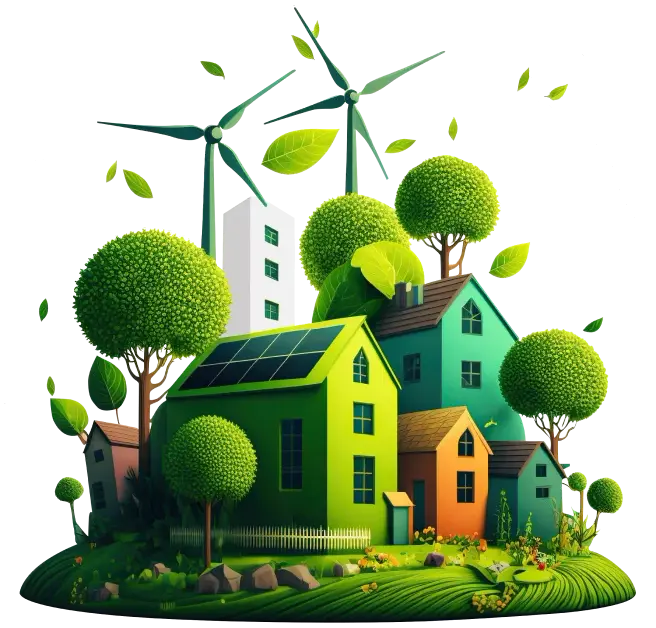
Community energy represents a modern approach to energy usage, where individuals, households or entire communities generate energy and share surplus electricity with others. This approach supports not only more sustainable and environmentally friendly energy use, but also greater energy independence and economic sustainability. If you share surplus energy, for example within an active customer group with other members, you can reduce your own energy costs or gain additional financial benefits.
Legislation
Community energy was introduced into Czech legislation through the Lex OZE II amendment to the Energy Act, effective from 1 January 2024. Another important milestone was the launch of the first phase of services of the Electricity Data Centre (EDC) on 1 August 2024. The EDC is a key part of the electricity sharing system, as electricity cannot be shared without registration in the EDC.
What forms exist
There are currently three main forms of community energy sharing: an active customer, an energy community and a renewable energy community.
Active customer
An active customer represents the simplest form of electricity sharing and also the option with the lowest administrative burden. This model allows generated electricity to be shared between multiple consumption points through the distribution grid, for example between a household, a company or other properties owned by the same owner.
When sharing through the distribution grid, the group may consist of up to 11 members. Another specific option is electricity sharing within an apartment building, where up to 1000 members can participate. This approach is particularly suitable for apartment buildings and homeowners’ associations that want to efficiently use jointly generated electricity and reduce energy costs.
Allocation keys
Allocation keys determine how generated energy is distributed among individual community members — in other words, who receives the shared energy and in what proportion. The distribution is set as percentages and can be adjusted over time according to current needs.
For energy sharing to work, both consumption and production points must be equipped with interval metering, i.e. smart electricity meters recording data in 15-minute intervals. The installation of these meters is ensured by the relevant electricity distributor. Electricity sharing is based precisely on evaluating production and consumption within individual fifteen-minute intervals.
Need help? Not sure where to start?
If you are unsure about any part of the process, need more information or would appreciate help with setup, feel free to contact us. We will be happy to explain everything and help you find a solution that makes sense for your specific situation.